
Find the Best Denesting Solution for Your Containers and Production Line
Not all containers behave the same way when stacked. Some separate easily, while others stick together, nest too tightly, or become difficult to handle at higher production speeds. Choosing the right denester machine can significantly improve efficiency, reduce downtime, and help your packaging line run more reliably.
At FEMC, we help manufacturers identify the best automated denester for their specific container type, material, and production requirements. Whether you’re working with trays, cups, bowls, lids, molded fiber packaging, or specialty containers, our engineering team can evaluate your application and recommend the right solution.
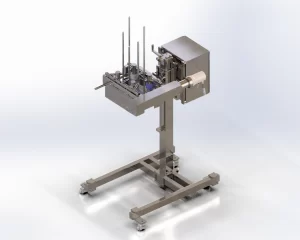
Why Container Type Matters in Denesting
The most effective denesting equipment is determined by the characteristics of the container being handled. Factors such as material, shape, stack consistency, flange design, nesting depth, and production speed all influence which denester technology will perform best.
Rather than forcing a standard machine to fit every application, FEMC evaluates each container individually to ensure reliable separation and placement.
Choosing the Right Denester for Trays
Plastic trays are among the most common packaging formats used in food production, medical packaging, and consumer goods manufacturing.
Common challenges include:
- Inconsistent stack quality
- Tray jams
- Misfeeds
- Tight nesting
- High-speed production requirements
Recommended solutions often include:
Screw Denesters
Screw denesters work well when trays maintain a consistent gap between stacked containers. They provide reliable, repeatable separation and are ideal for many high-volume applications.
Pick & Slide Denesters
For trays with compressed flanges or unique geometries, Pick & Slide systems offer greater control during separation and placement.
Choosing the Right Denester for Cups and Tubs
Cups and tubs often create challenges due to vacuum lock, static electricity, and tight nesting.
Common applications include:
- Yogurt cups
- Dairy containers
- Prepared food cups
- Plastic tubs

Recommended solutions include:
Vacuum Denesters
Vacuum-assisted denesters help separate containers that tend to stick together while maintaining consistent placement.
Pick-and-Place Denesters
Pick-and-place systems offer precise handling for containers that require additional control during the denesting process.
Choosing the Right Denester for Bowls
Bowls frequently feature deeper nesting profiles and varying flange designs that can make separation difficult.
Common challenges include:
- Deep nesting
- Stack instability
- Product variation
- High-speed placement requirements
Depending on the application, FEMC may recommend:
- Pick-and-place denesters
- Vacuum denesters
- Robotic denesting solutions
The best approach depends on the bowl geometry and production requirements.
Choosing the Right Denester for Lids
Lids often require specialized handling because of their lightweight construction and tendency to stick together.
Common lid applications include:
- Plastic lids
- Foil lids
- Paperboard lids
- Composite packaging lids
Denesting systems for lids typically require precise handling and placement to prevent misalignment during downstream sealing operations.
Recommended solutions may include vacuum-assisted systems, pick-and-place automation, or custom-engineered denesters.
Choosing the Right Denester for Molded Fiber and Paper Packaging
As sustainable packaging becomes more popular, many manufacturers are transitioning to molded fiber, paperboard, and compostable packaging materials.
These products present unique denesting challenges, including:
- Fragility
- Variable stack quality
- Surface friction
- Material deformation
Peel Denesters
Peel denesters are often the preferred solution for molded fiber and paper packaging because they gently separate containers without causing damage.
Applications for peel denesters include:
- Produce trays
- Sustainable food containers
- Paperboard packaging
- Molded fiber bowls and trays
Choosing the Right Denester for Rigid Containers
Rigid containers are commonly used in food packaging, industrial products, and consumer goods applications.
Challenges often include:
- Heavy container weights
- Tight nesting
- Static buildup
- High throughput requirements
Recommended solutions may include:
- Screw denesters
- Pick-and-place denesters
- Robotic denesters
- Custom-engineered automation systems
The ideal container denester depends on the specific product dimensions and production environment.

Common Container Handling Challenges
Containers Sticking Together
Static electricity, vacuum lock, and tight nesting can make separation difficult.
Inconsistent Stack Quality
Manufacturing variations can cause misfeeds and production interruptions.
Container Damage During Separation
Delicate packaging materials require specialized handling to prevent deformation.
High-Speed Production Demands
As production speeds increase, denesting systems must maintain accuracy without sacrificing throughput.
Frequent Downtime
Poorly matched denesting equipment can lead to jams, operator intervention, and reduced line efficiency.
FEMC engineers solutions specifically designed to address these challenges before they impact production.
Why Sample Testing Matters
The most accurate way to determine the best denesting equipment is through sample testing.
By evaluating actual containers, FEMC engineers can identify:
- Stack characteristics
- Separation challenges
- Material behavior
- Production requirements
- Potential bottlenecks
Testing allows our team to recommend the most reliable denester solution before equipment is designed or built.
This approach helps reduce risk, improve performance, and ensure the system meets your production goals.
Partner With FEMC to Solve Complex Denesting Challenges
Choosing a denester isn’t just about selecting a machine. It’s about solving a production problem.
For more than 45 years, FEMC has helped manufacturers improve packaging line efficiency through custom-engineered denesting equipment and automation systems. Our team works closely with customers to evaluate container behavior, identify challenges, and recommend solutions that deliver reliable results.
Whether you’re launching a new package design, upgrading an existing line, or struggling with container handling issues, we’re here to help.
Send Us Your Samples for Testing
Send your trays, cups, bowls, lids, molded fiber packaging, or specialty containers to FEMC for evaluation. Our engineers will help identify the best denesting solution for your application.